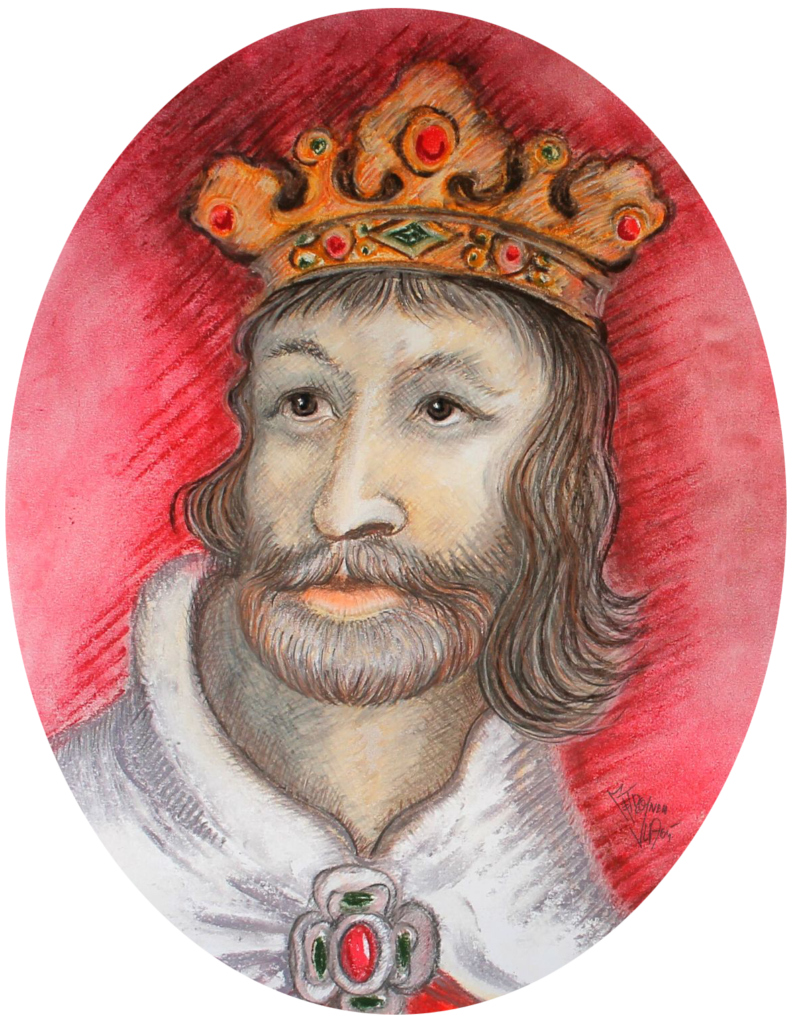
One of the darkest periods in the history of the Kingdom of Hungary is associated with John Zápolya. He was born into a rich magnate family. When he was twelve, he inherited his father’s extensive property. At a young age, he was already seen by some of the Hungarian estates as a suitable future ruler, and thus they put him forward in 1505 as a candidate for the Hungarian throne. In 1526, the Hungarian army not only suffered a defeat at Mohács against the Turkish sultan Suleiman, but the king, Louis II, also died. The Hungarian throne thus had no direct successor. Zápolya made his claim to the royal crown according to the Hungarian law based on election, but so did the Austrian archduke Ferdinand Habsburg, pleading the law of inheritance based on marriage contracts from 1515 and his claims according to the treaties of Bratislava from 1464 and 1491. They thus formed two enemy camps, and a civil war broke out in Hungary which lasted for more than one and a half decades. Most of the battles took place on the territory of present-day Slovakia. The Turks took advantage of the country’s lack of unity. They joined John Zápolya’s side and used this alliance to pillage that part of Hungary which was under Ferdinand’s influence. Peace was not reached until 1538. However, the war had no victors, only vanquished. The territory of Hungary was divided into two parts, with John Zápolya ruling one and Ferdinand I the other.