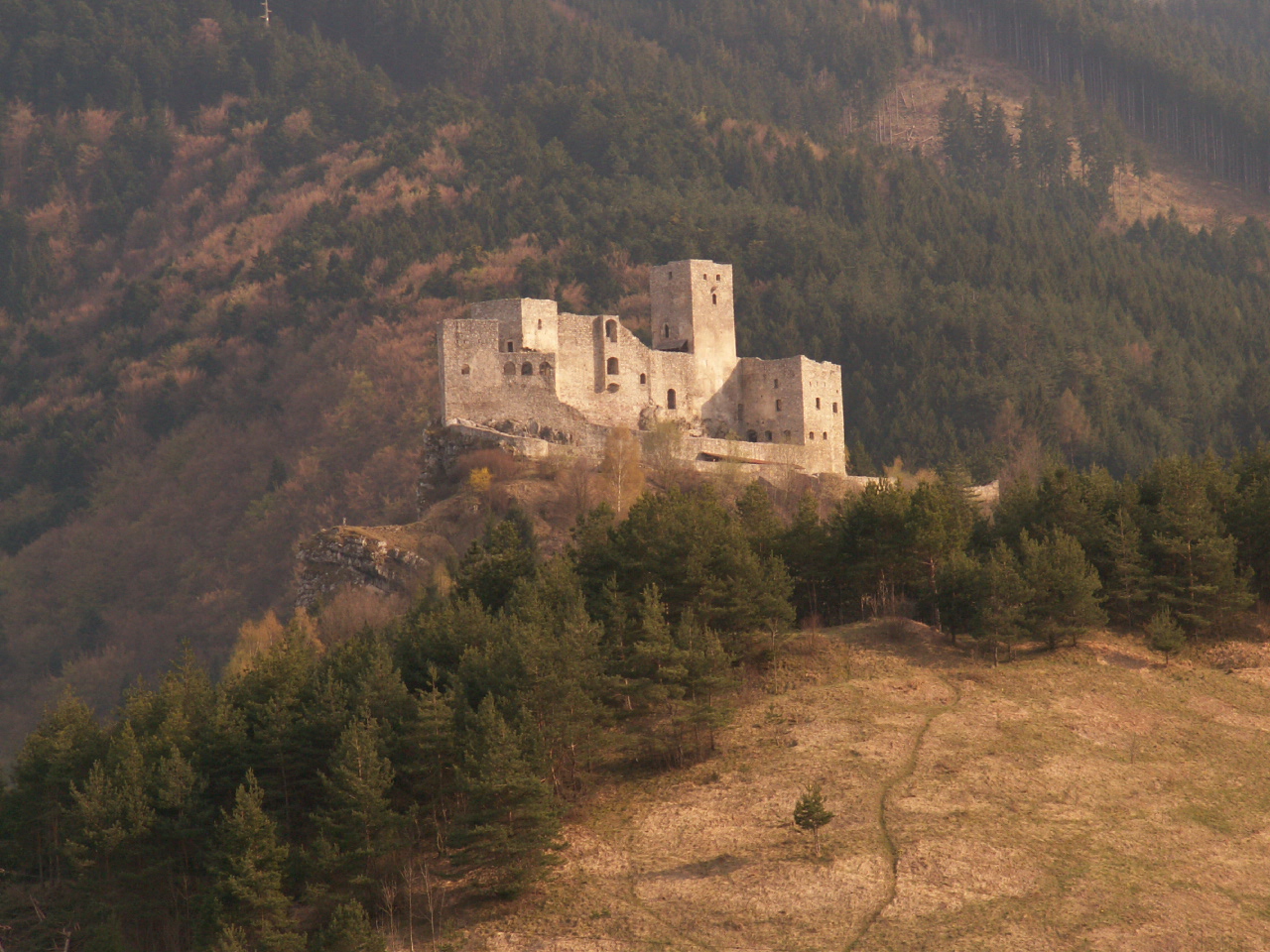
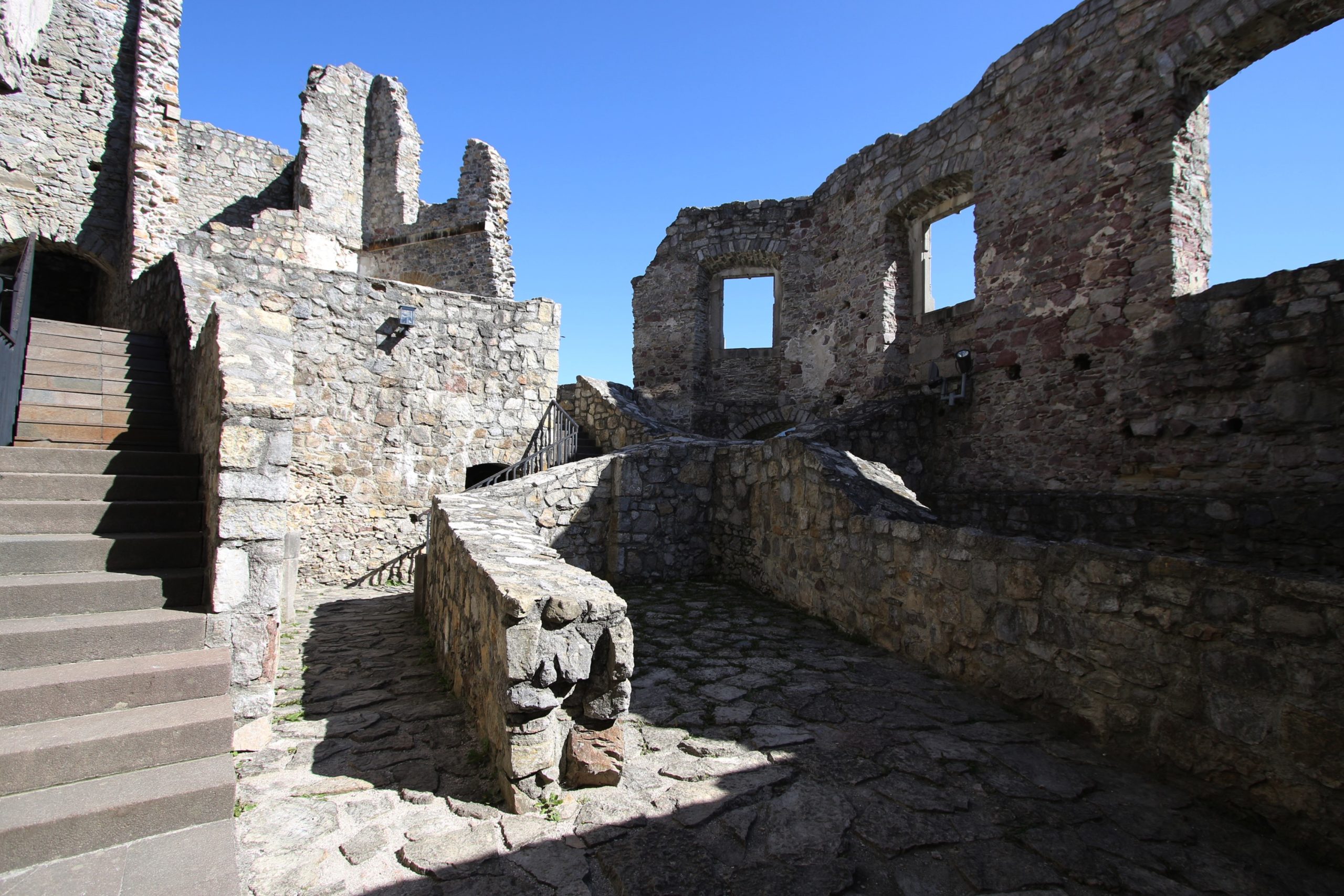
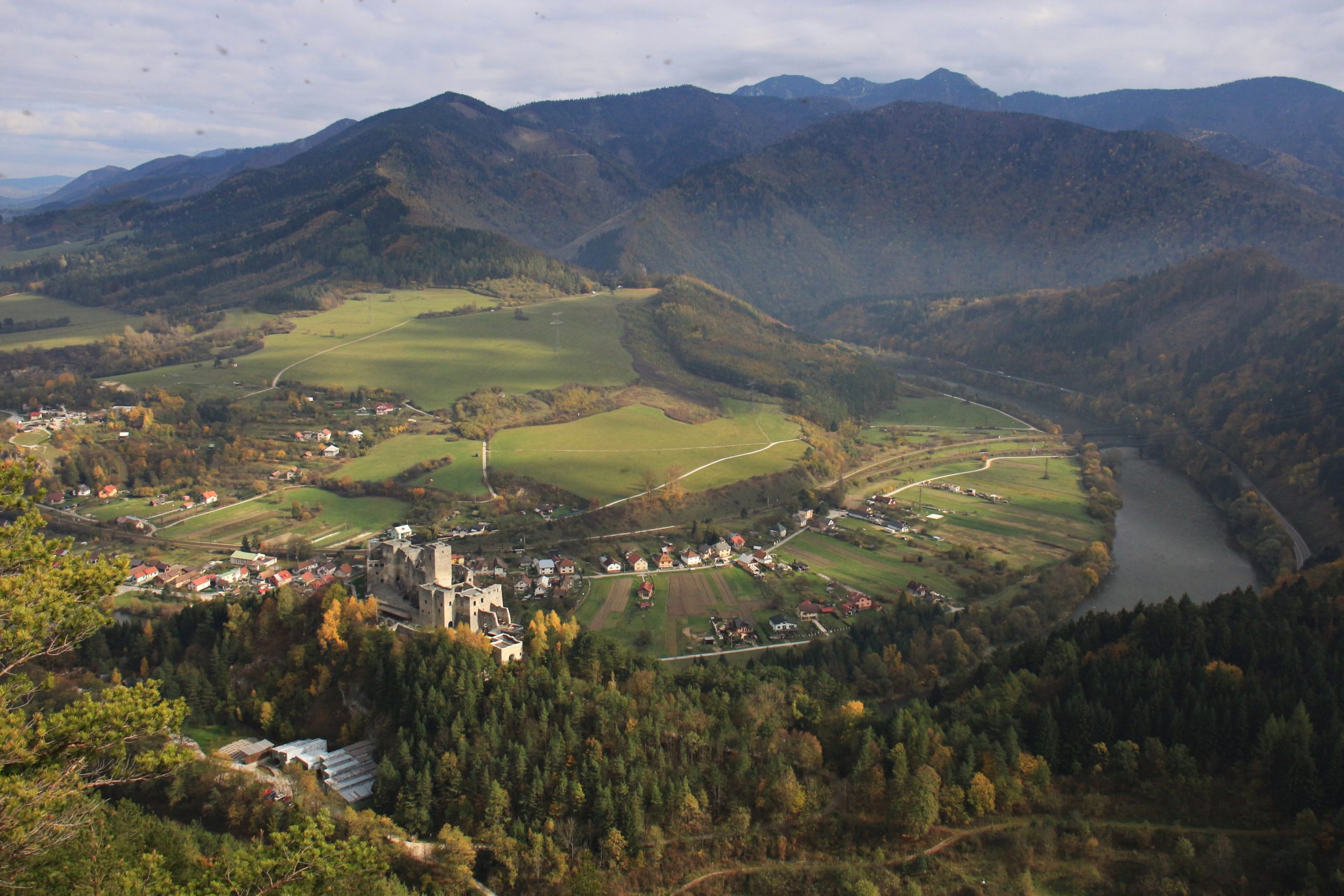
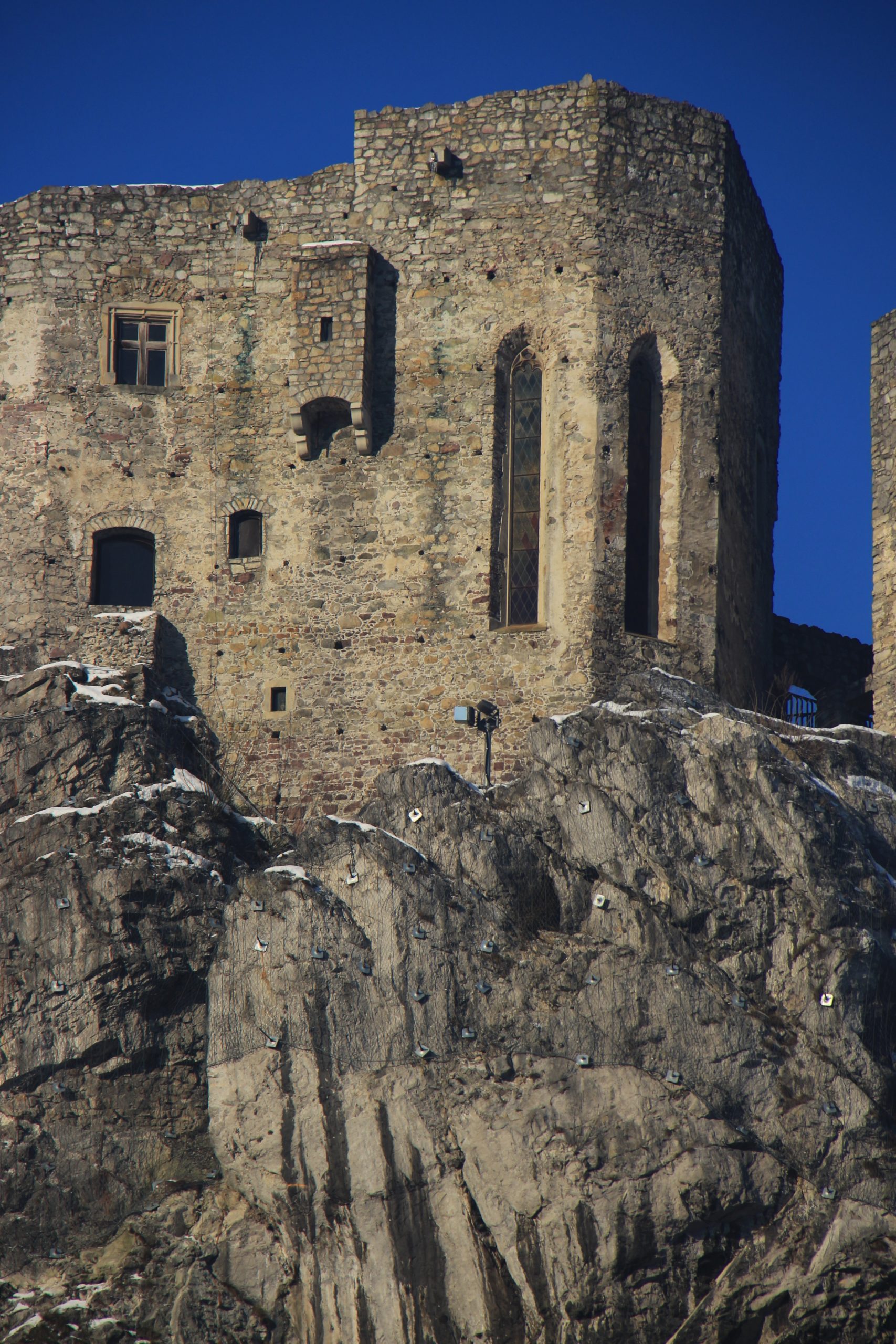
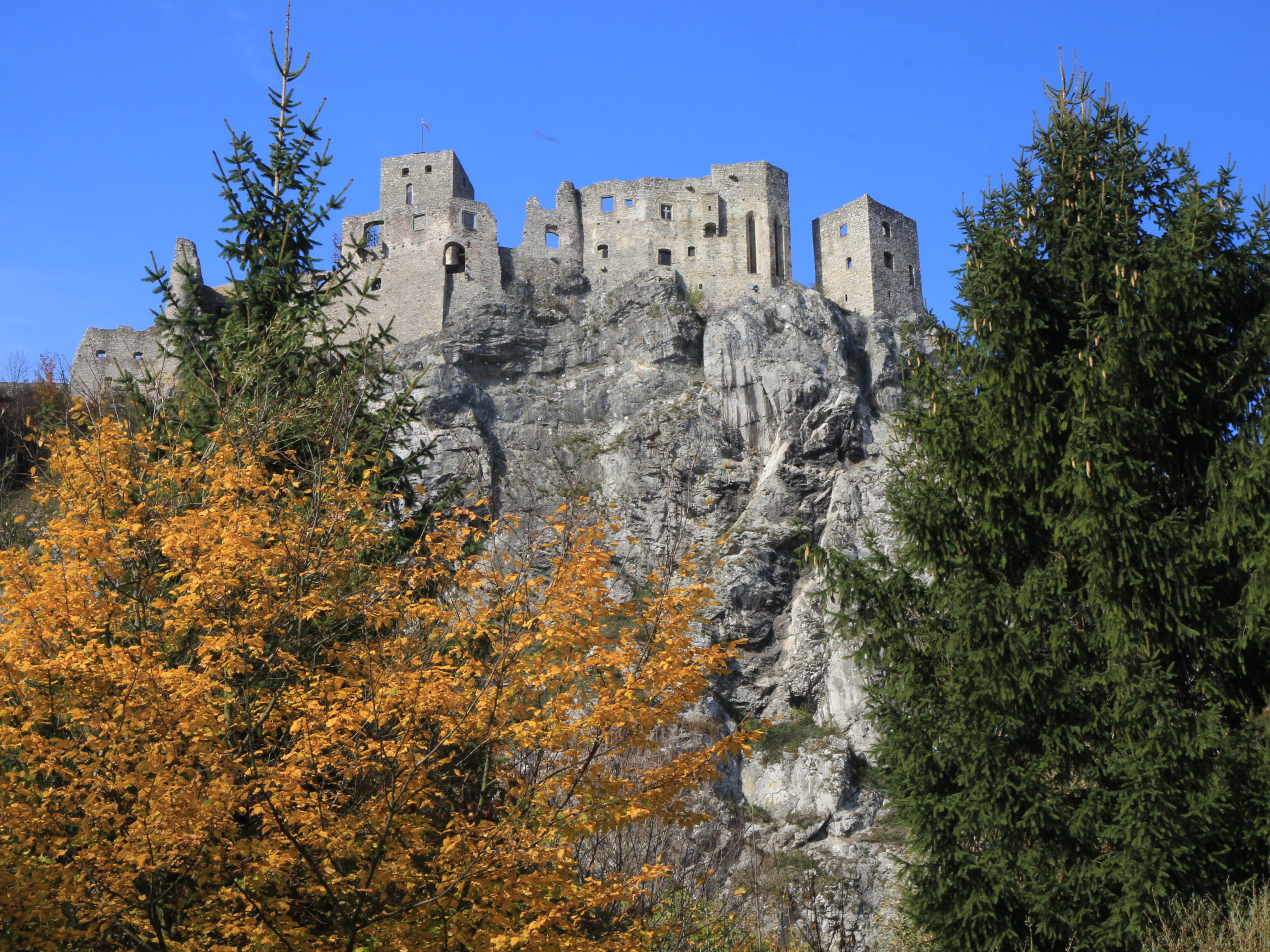
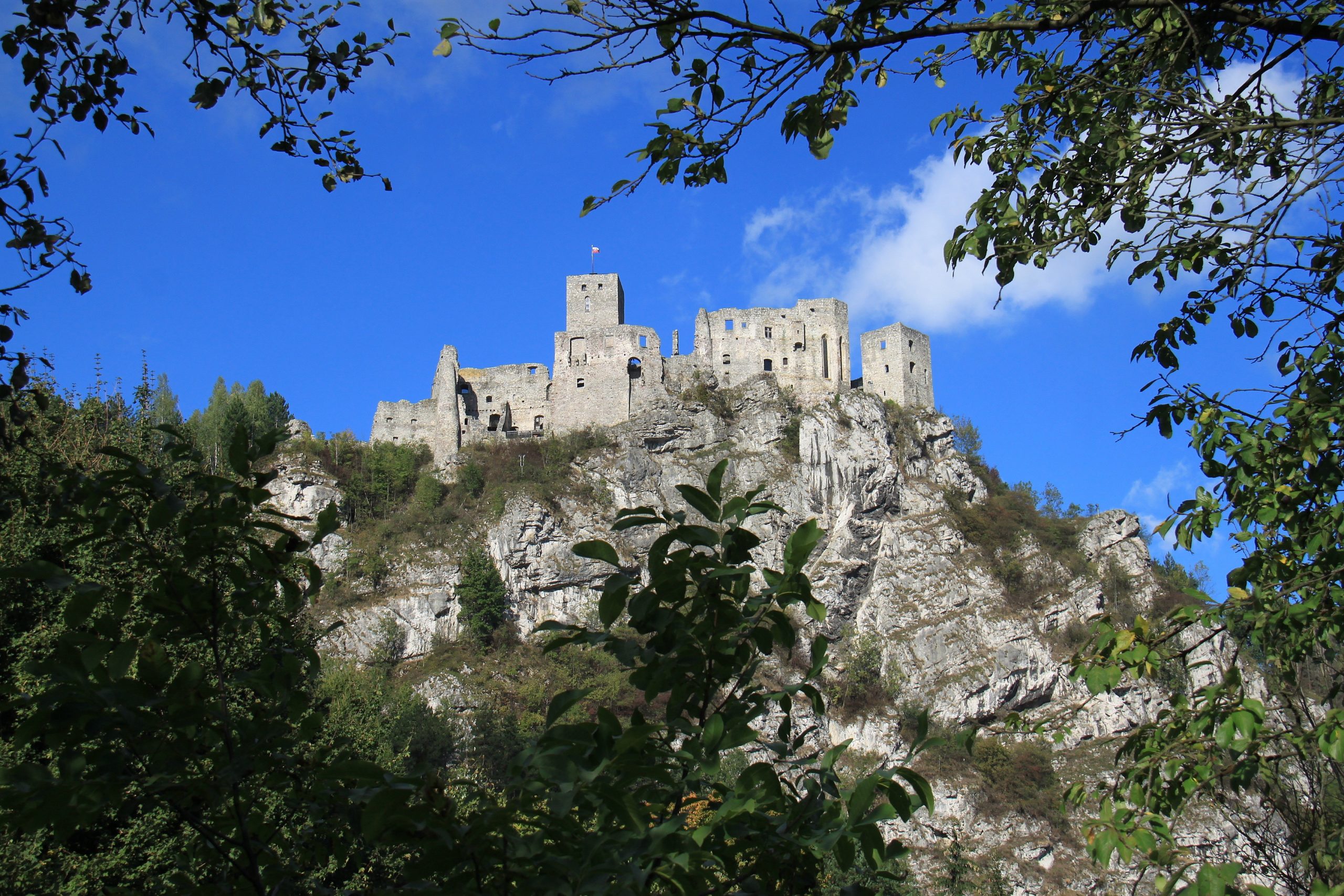
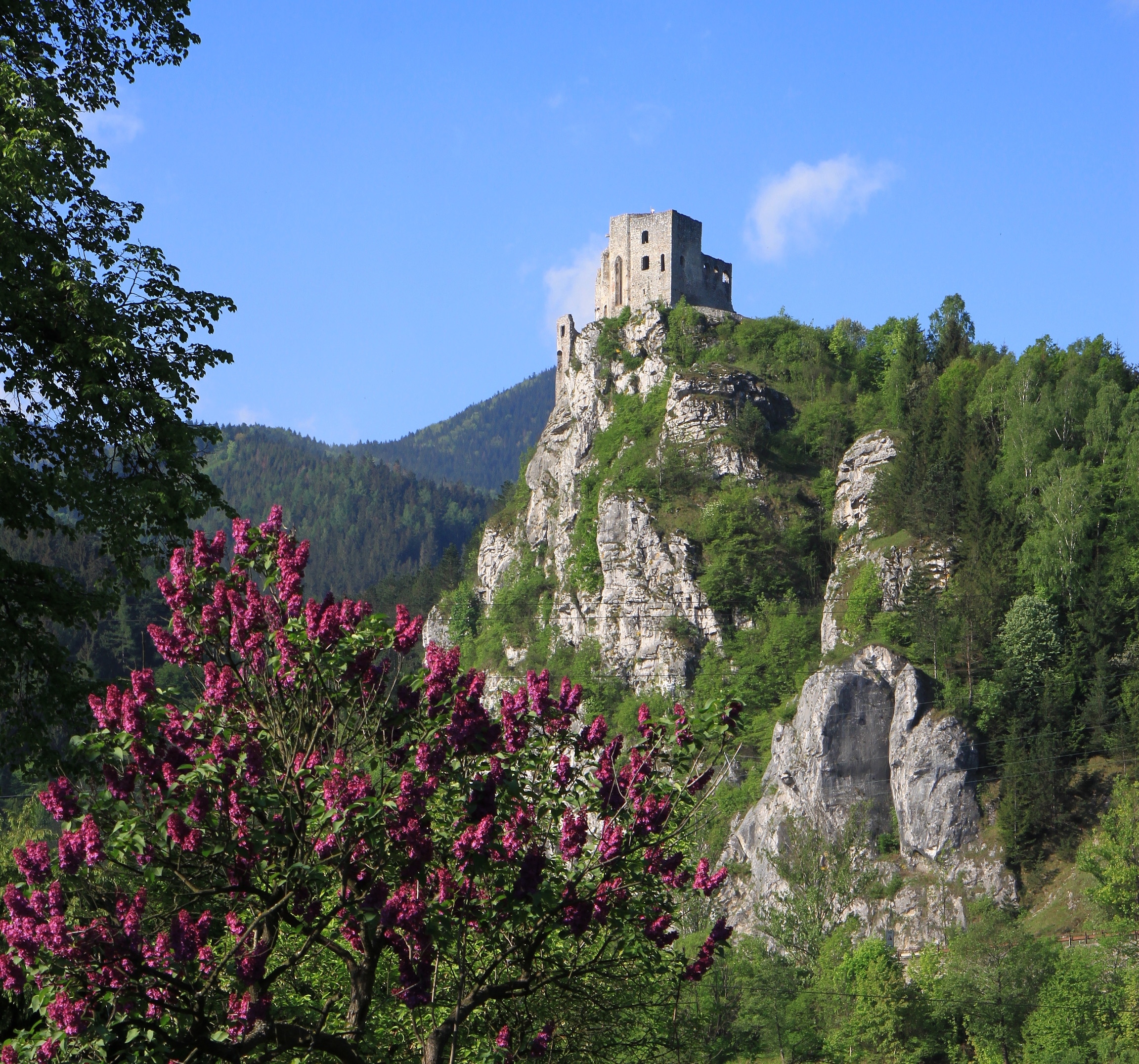
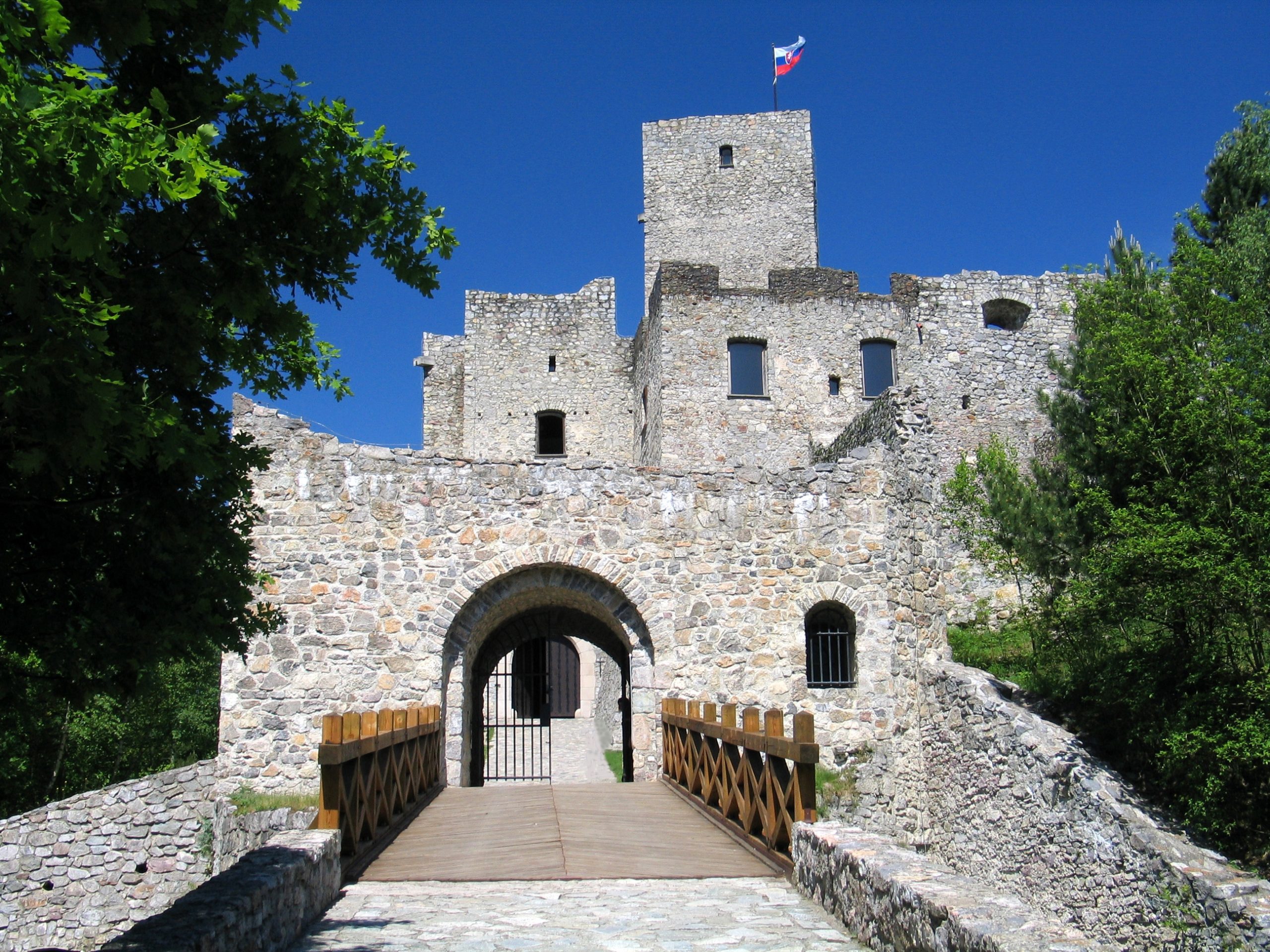
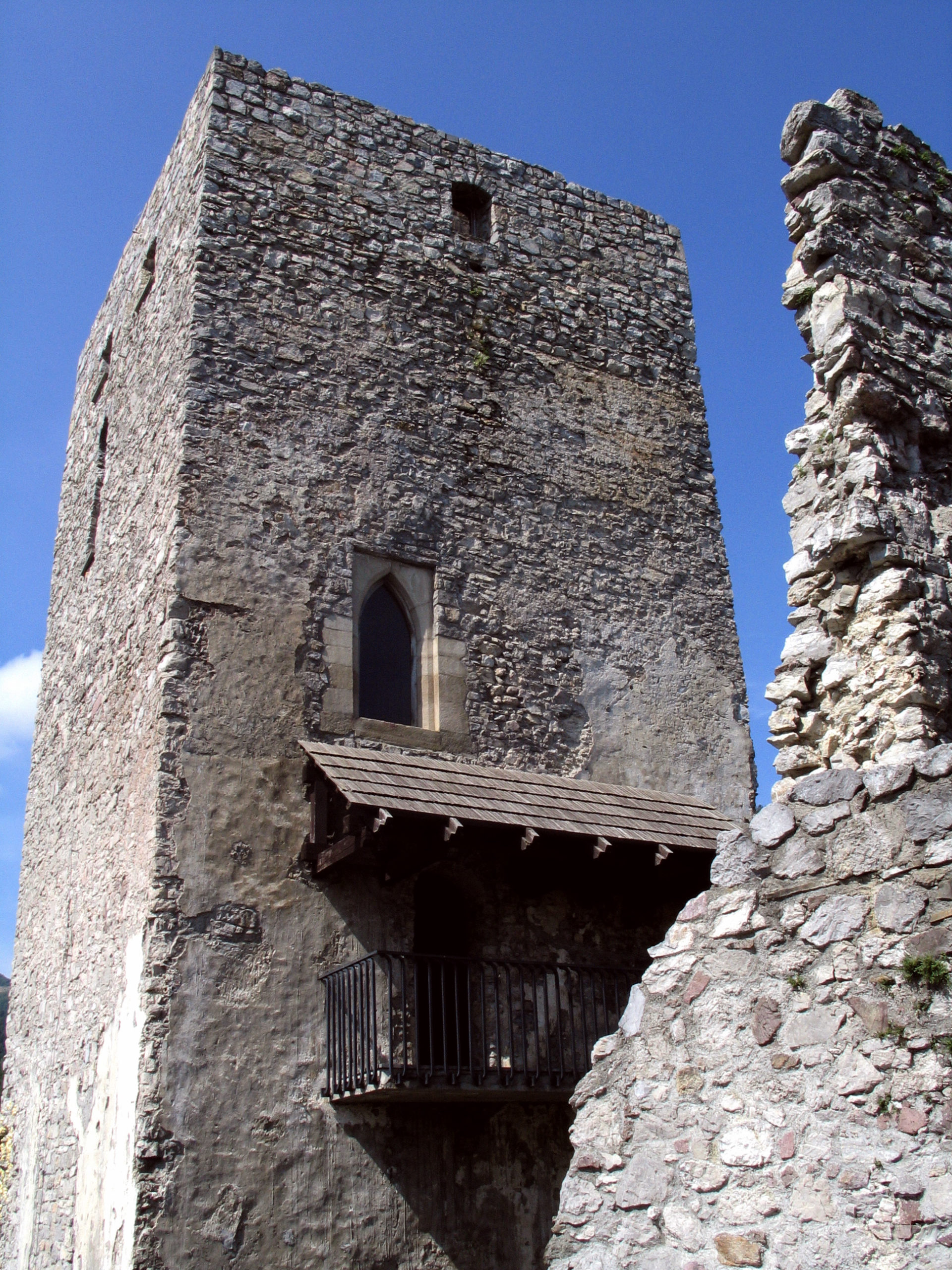
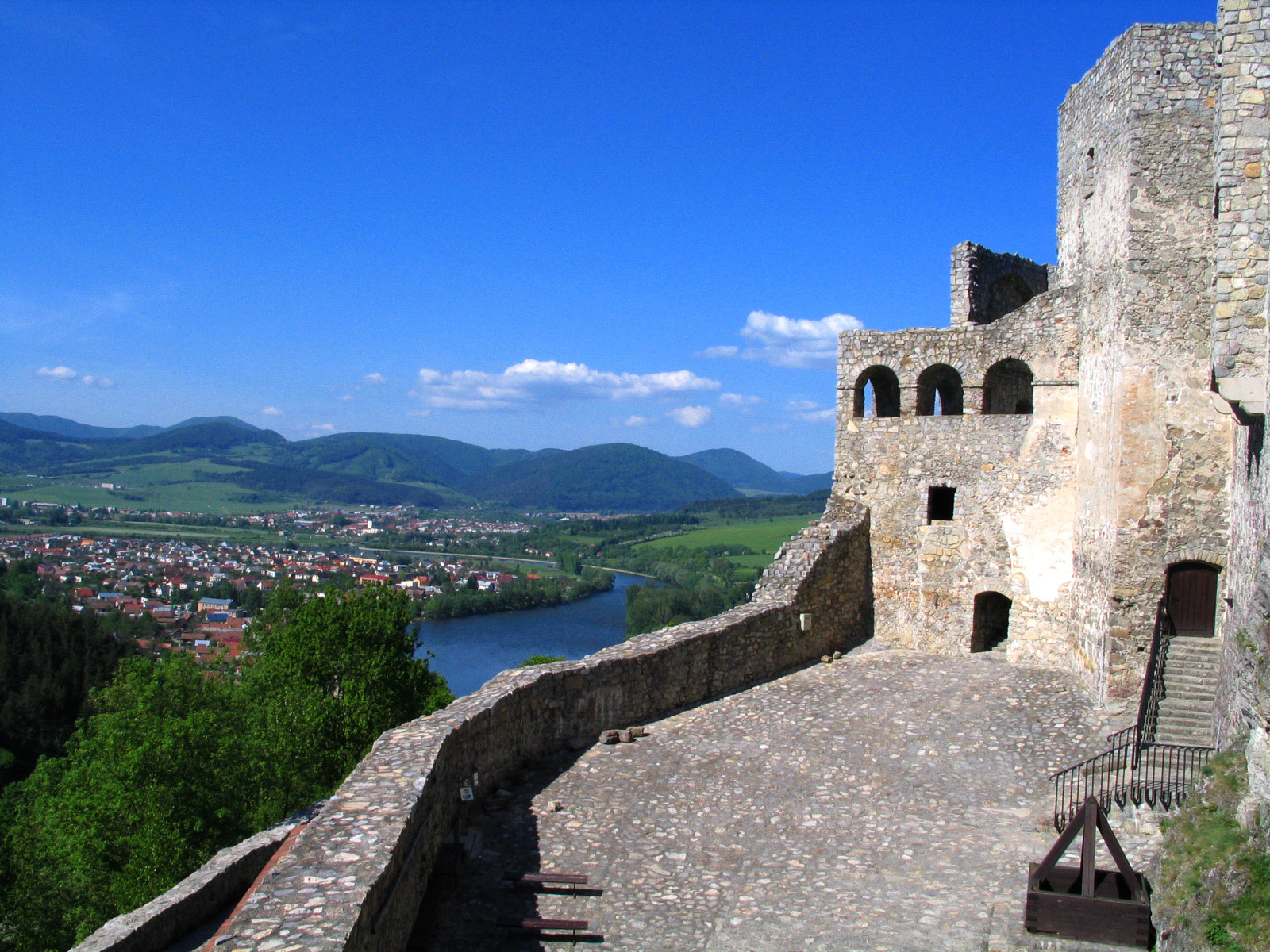
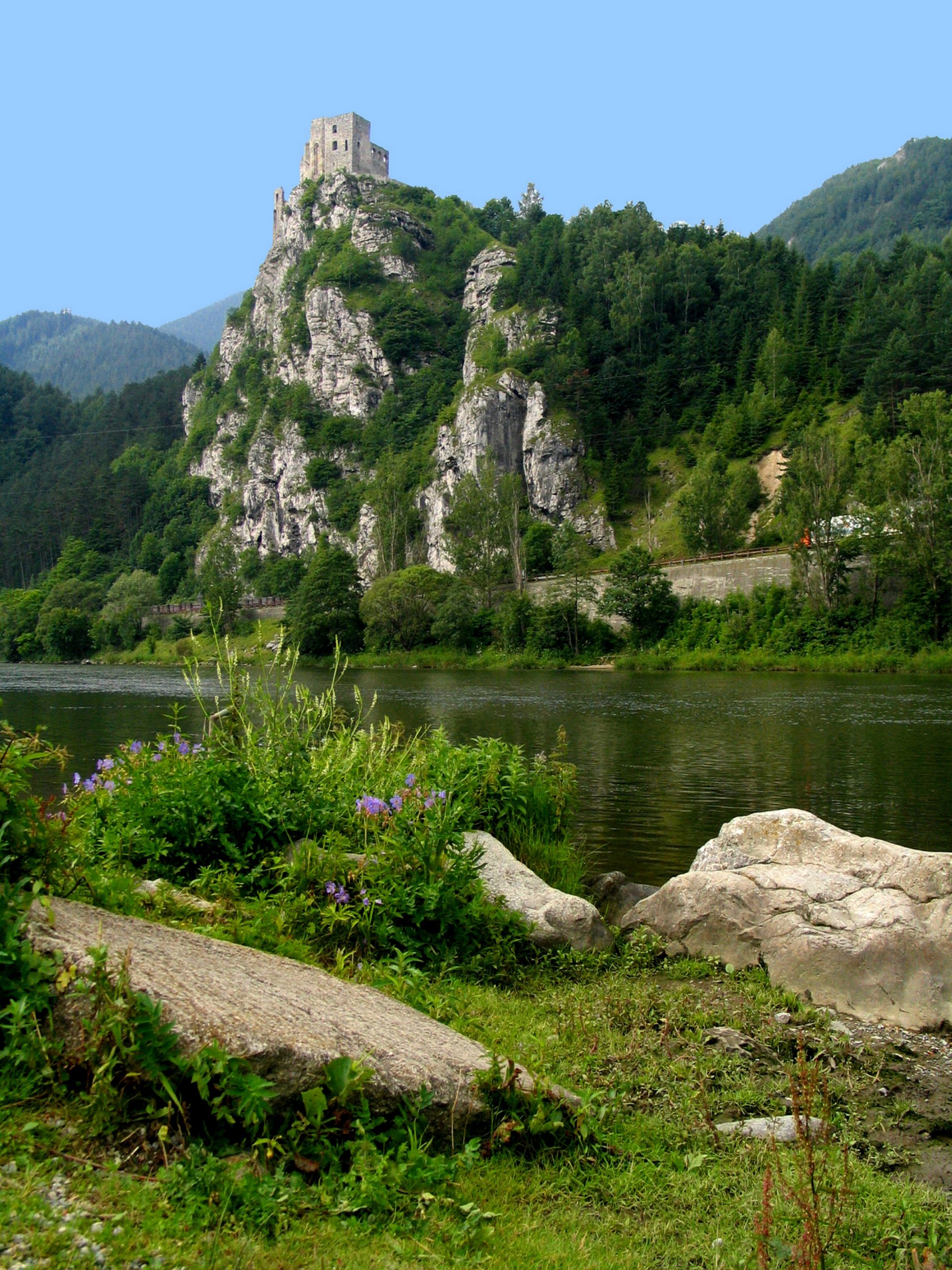
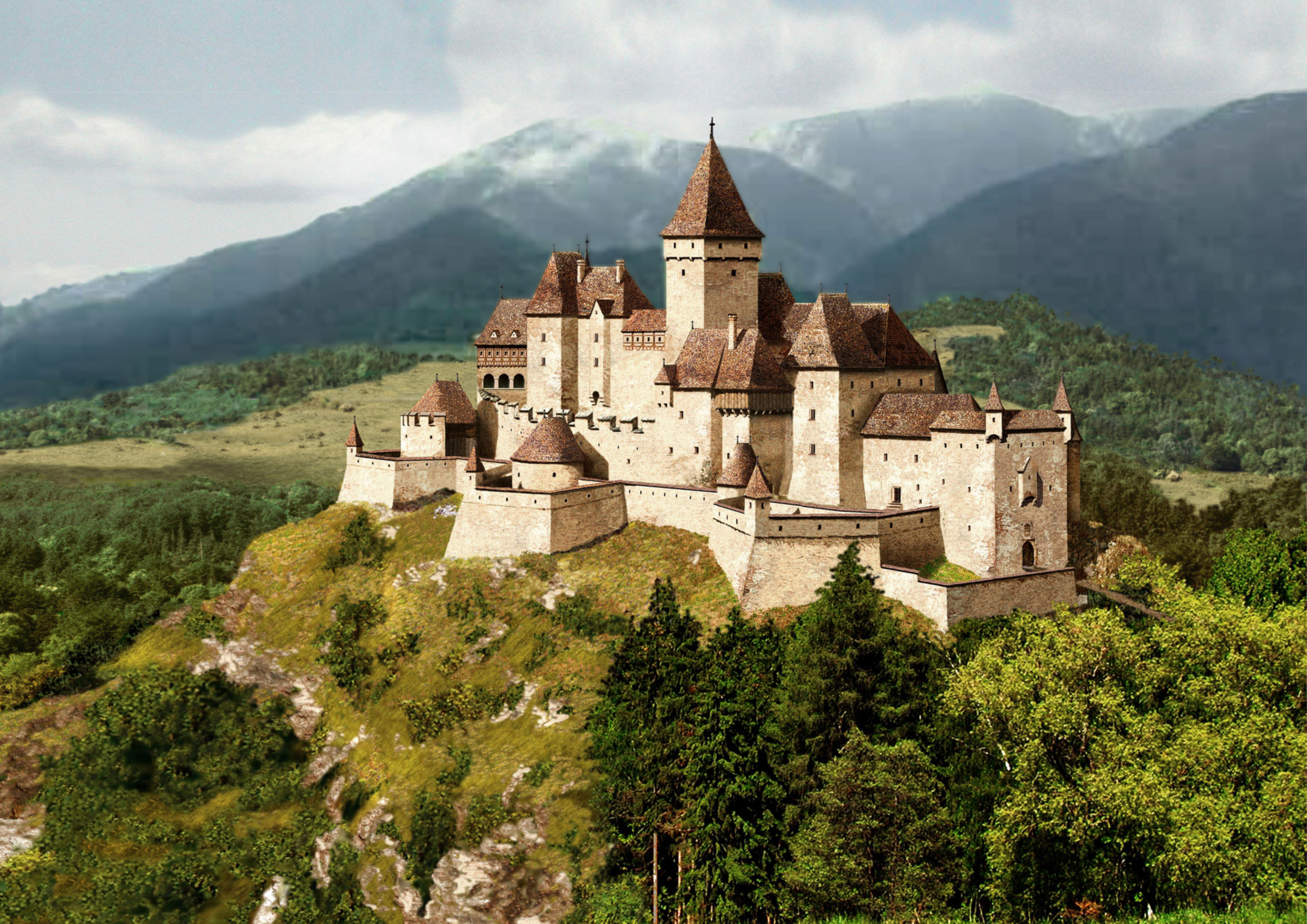
What began as a small guardhouse built at the turn of the 14th century near a ford across the river Váh grew over time to become a massive castle complex. Detailed archaeological, architectural and historical research has enabled us to find out how it was built. Contemporary engravings and inventories from various periods also give us an idea of the layout of different parts of the castle. Its construction and reconstruction can be divided up into several phases.
During the first phase, the builders constructed the corner pillars on the eastern side of the castle hill, above the rocks facing the Váh river; gradually they built the southern, western and northern walls of the what was to become the main castle building. These walls encircled the most accessible parts of the small guardhouse near the toll gate. Later, the walls were built on the eastern side, and a moat was dug out under the southern wall of the fortification. The entry was via a wooden ladder. This small fort, measuring only 18 x 22 metres, was the oldest part of the castle complex.
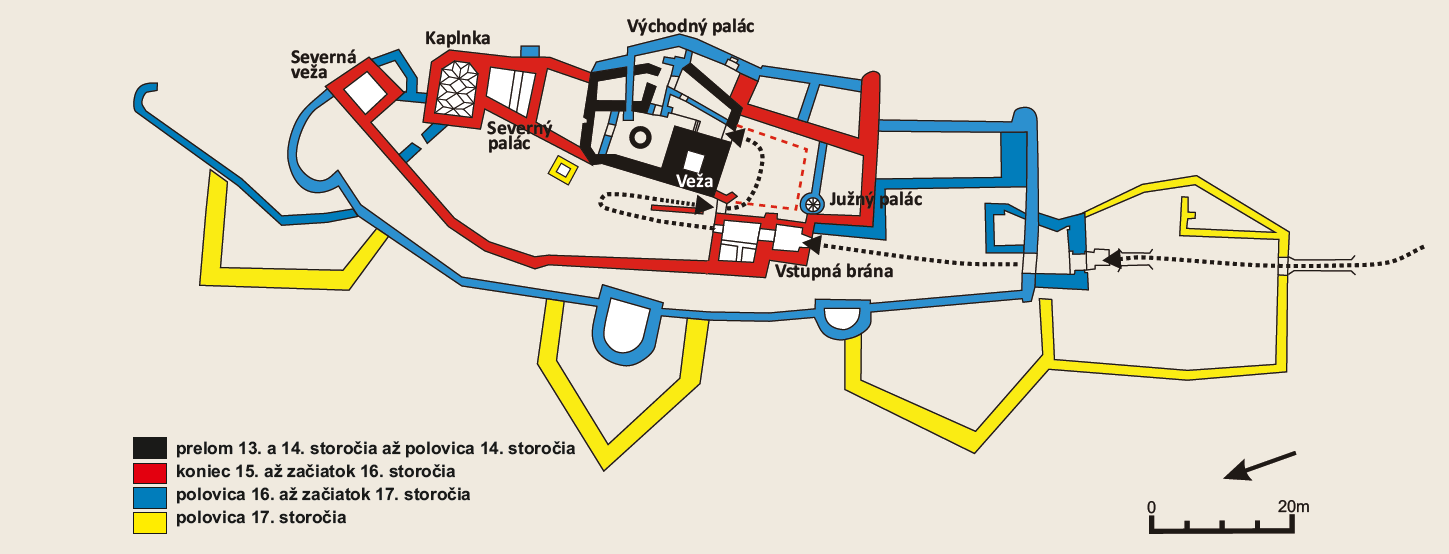
Floor plan of the castle
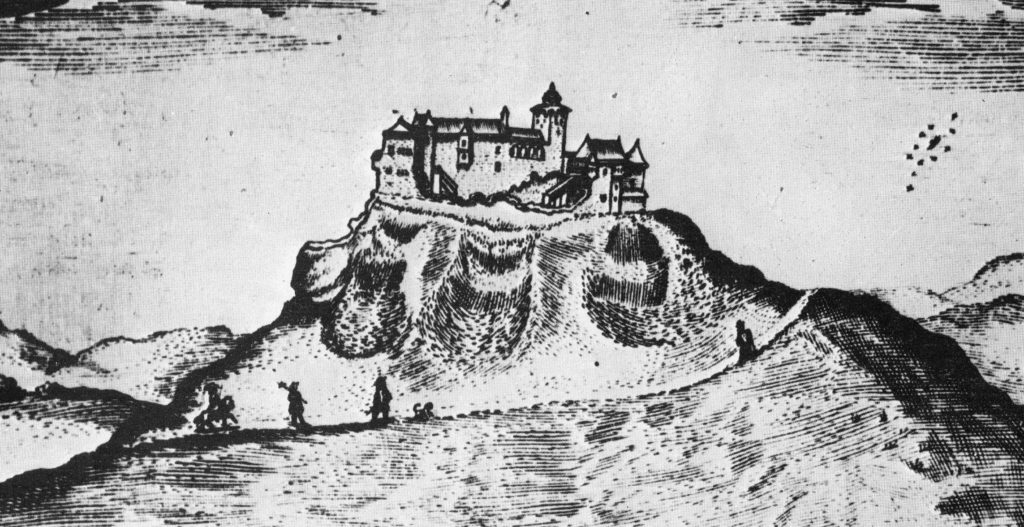
Engraving of Strečno castle in the 17th century, probably after the demolition of the fortifications (unknown artist)
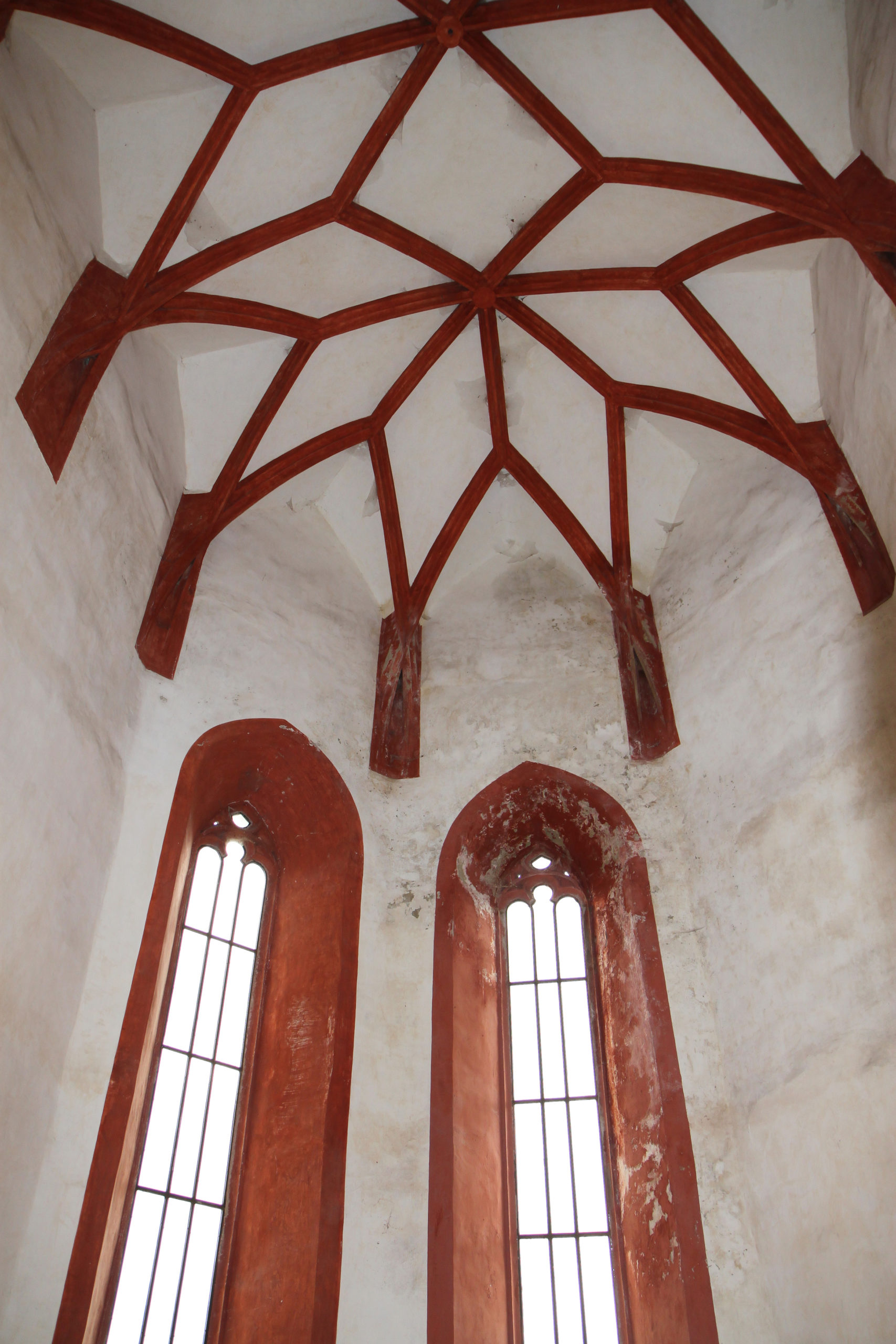
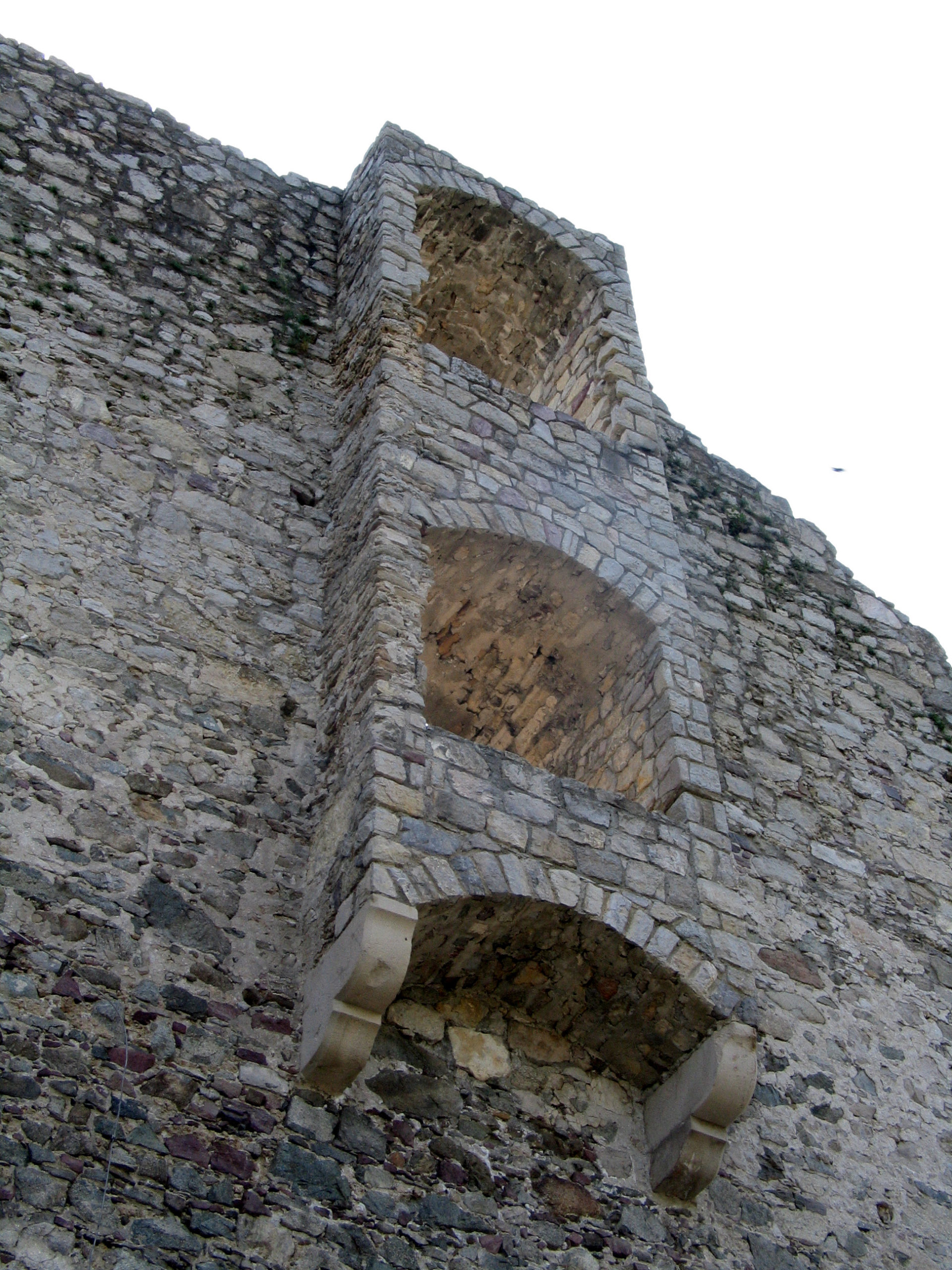
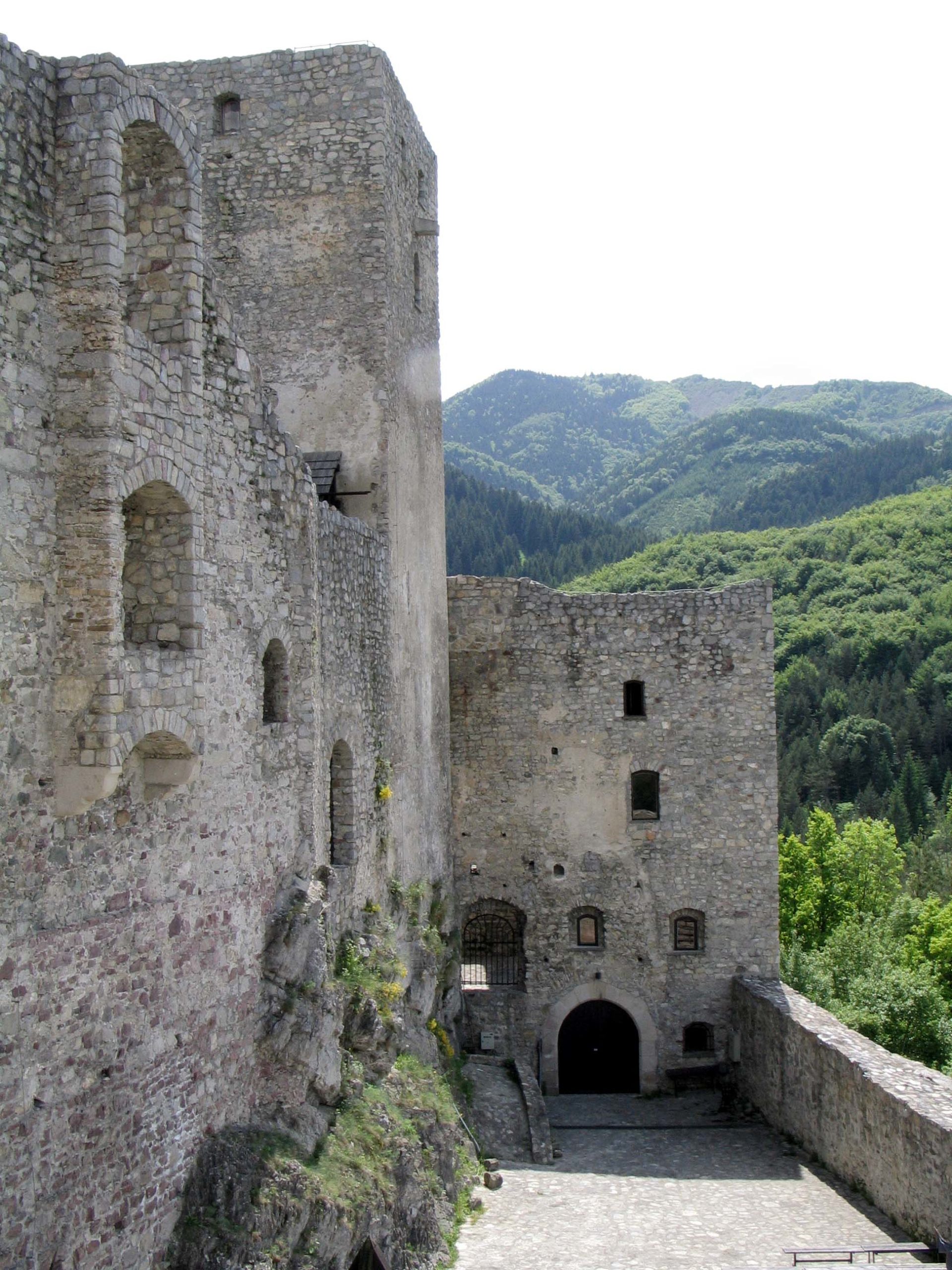
At the turn of the 15th century, part of the northern and eastern walls were knocked down, and the construction of a Gothic palace began by adding a forward wall on the eastern side. In the courtyard area, under the tower, the builders built new walls which became the eastern palace once the roof was installed. The northern palace with its chapel was attached to it in time. The building of what is now the chapel was originally covered with a flat roof and used as a guard tower. Later it was covered with a new ceiling, thus giving the chapel its final appearance. Inside, two galleries were built at the level of the flooring of the northern palace and a crypt was hewed out of the rock under the floor.
During the next phases, an entrance was made in the second gallery creating a passage into the northern tower. The latter was built by adding a rectangular building to the north-western corner of the chapel. The southern palace and the small courtyard were made by filling in the original moat on the southern side and gradually building up this area. A new gate was added to the western side of the courtyard and linked to the northern tower. One more gate was added to the southern gate and the wall of the southern palace. In the end, the northern gate ceased to fulfil its original purpose. By adding roofing and reducing the size of the entrance, further living quarters were created. This important reconstruction at the turn of the 16th century formed the main, residential heart of the castle.
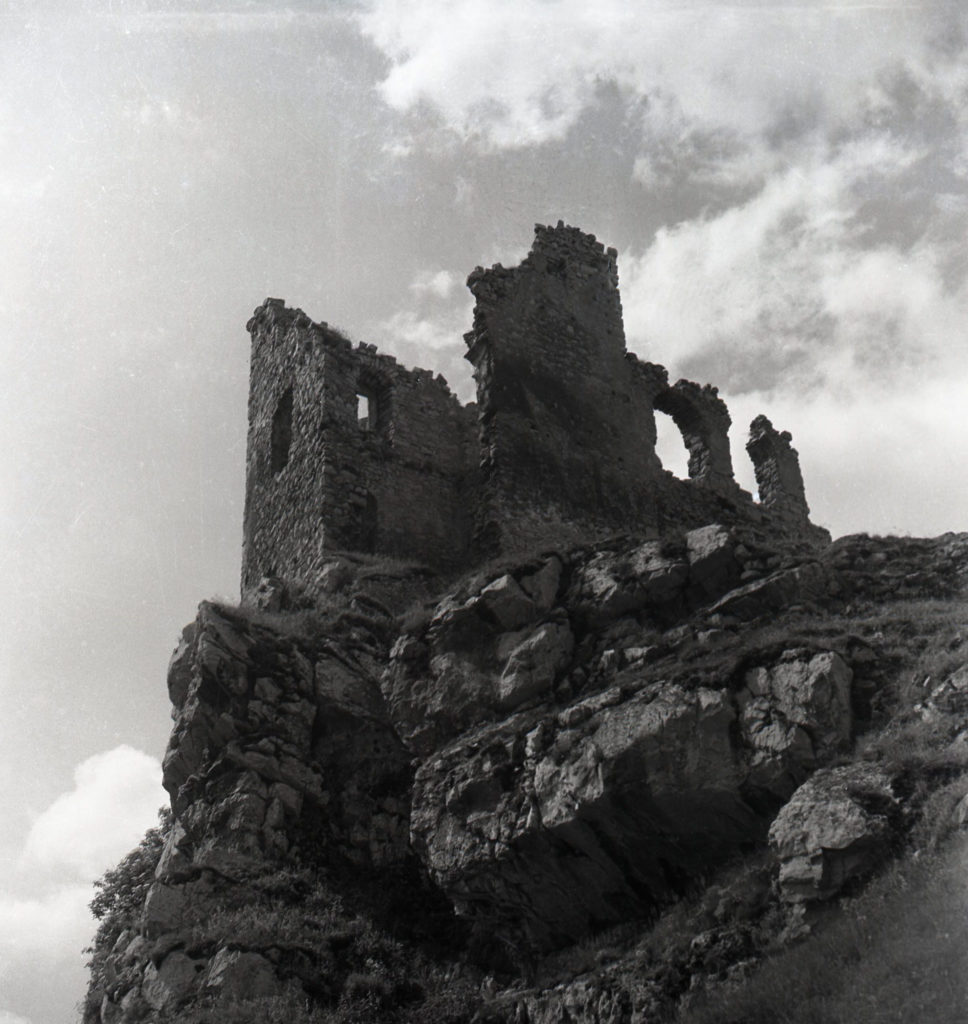
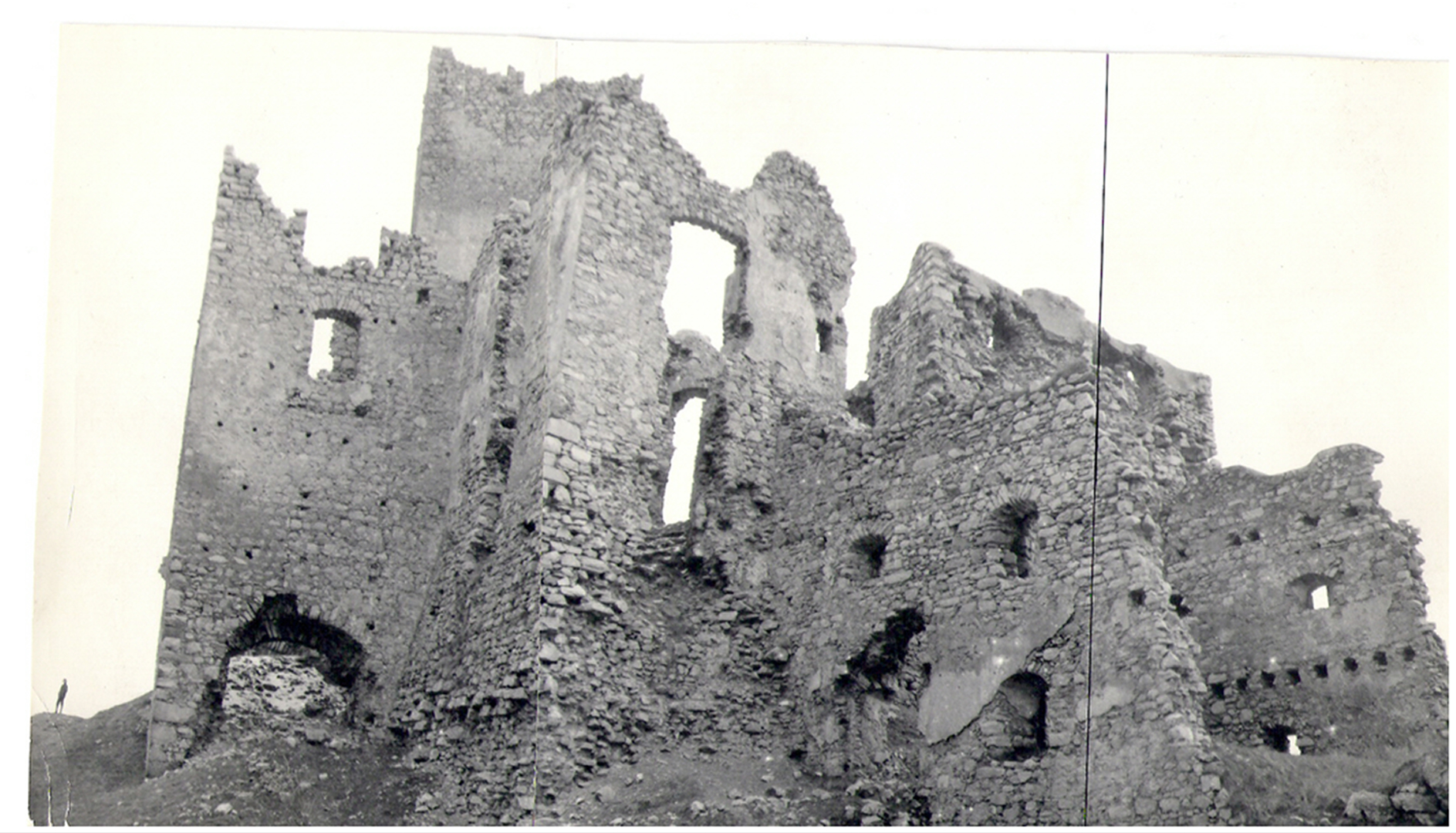
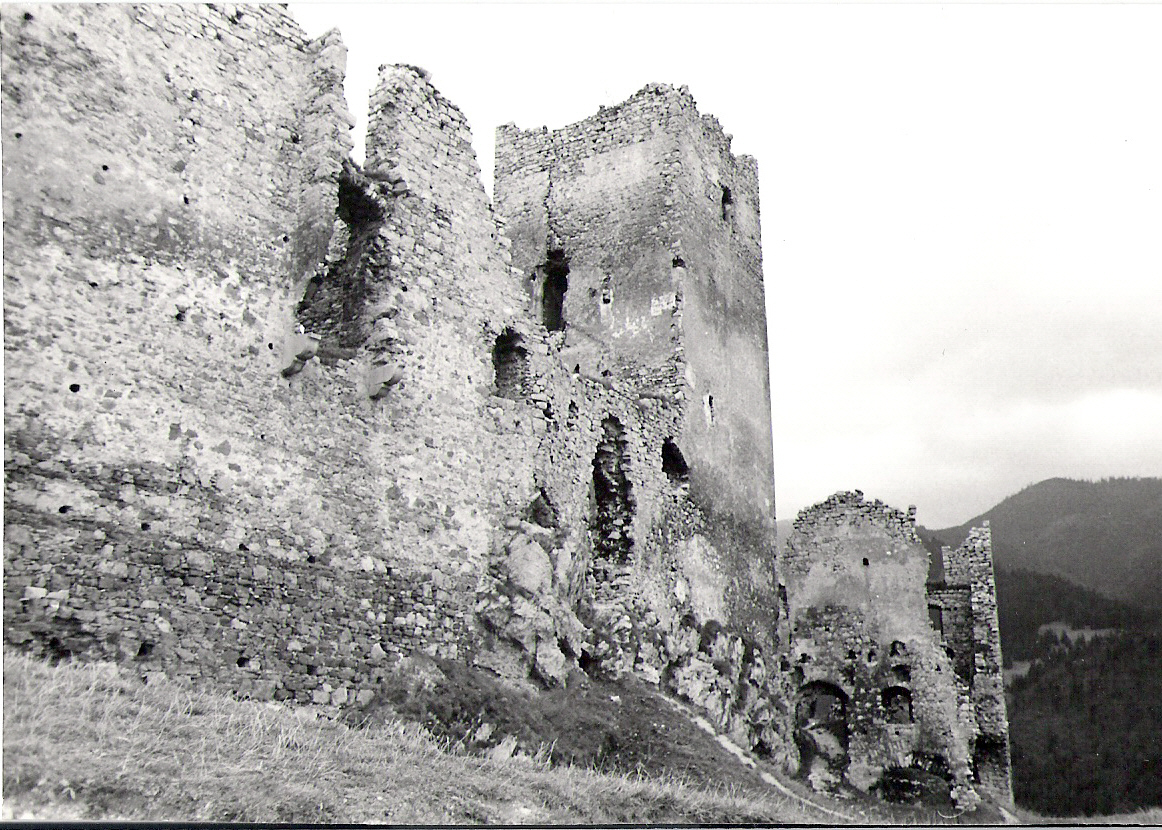
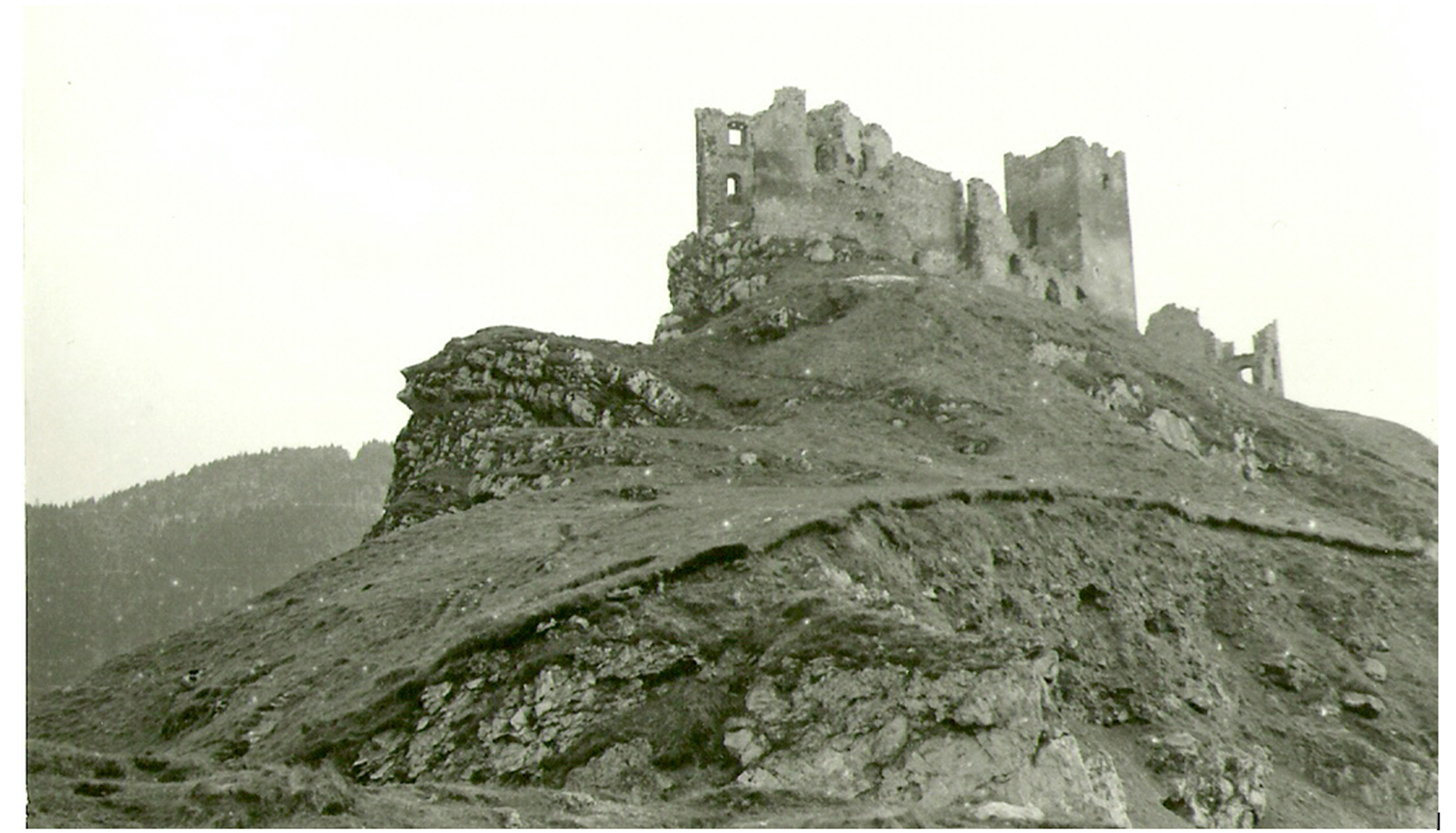
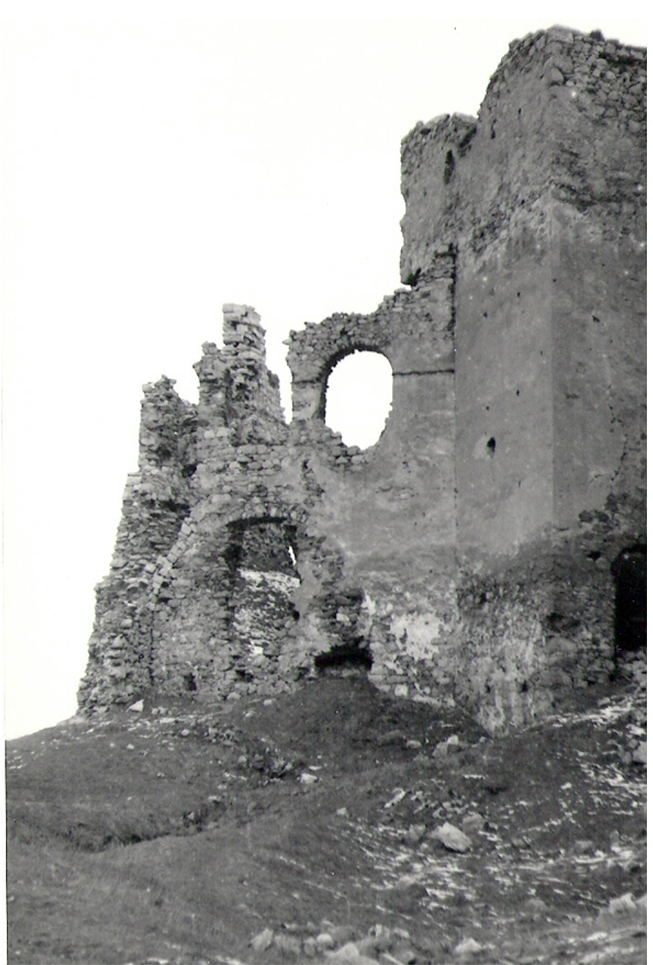
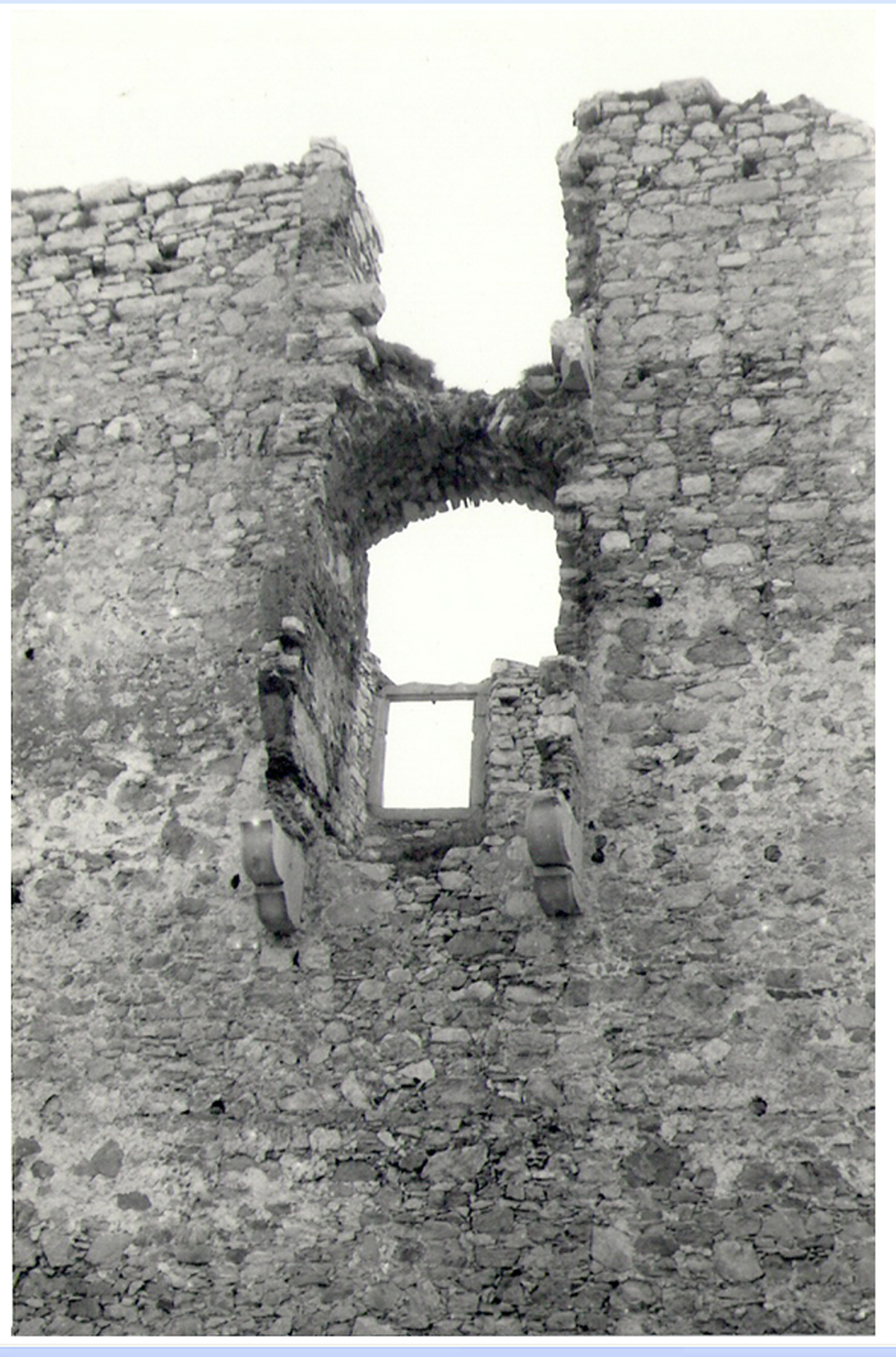
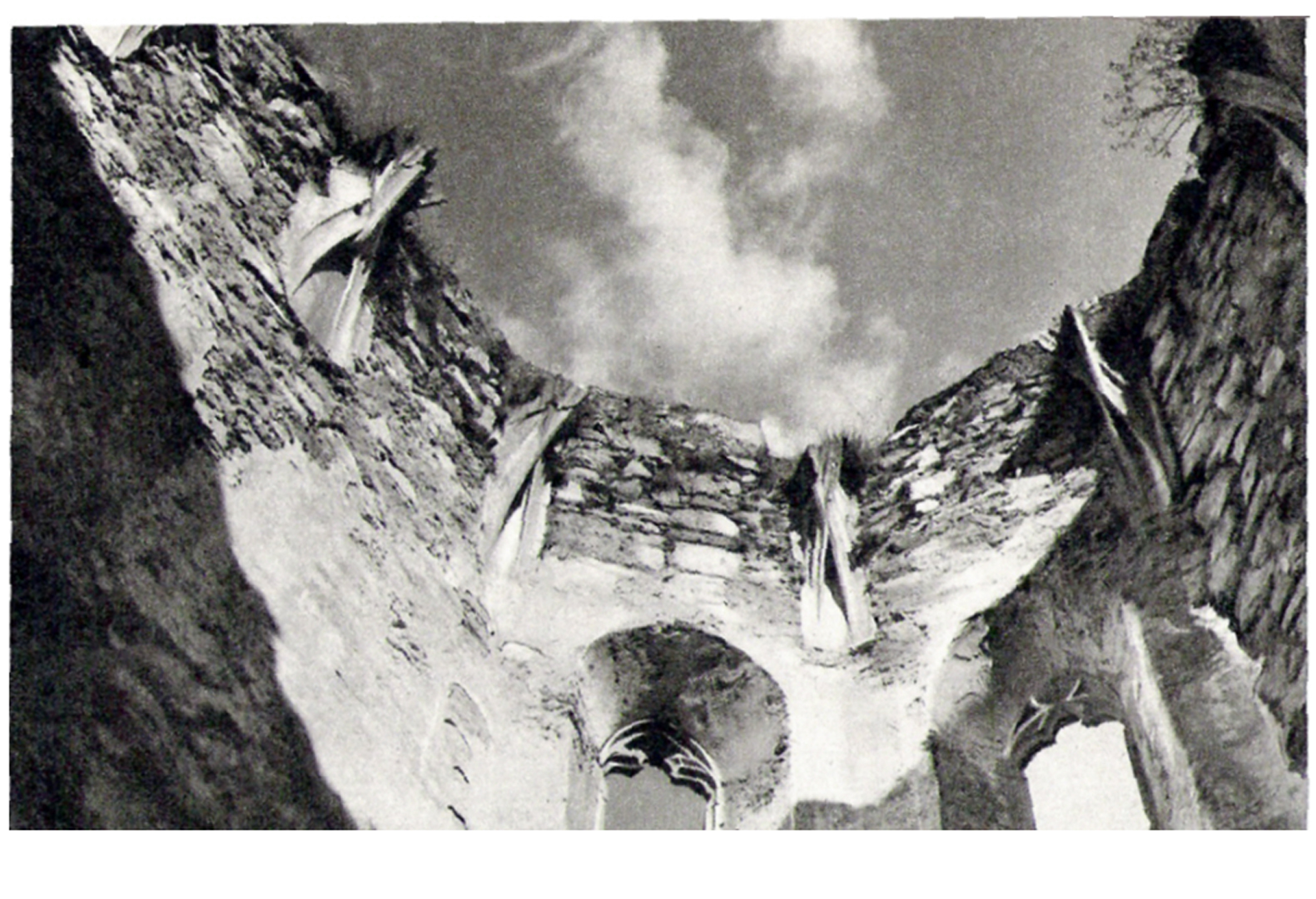
Ruins of Strečno castle (1967)
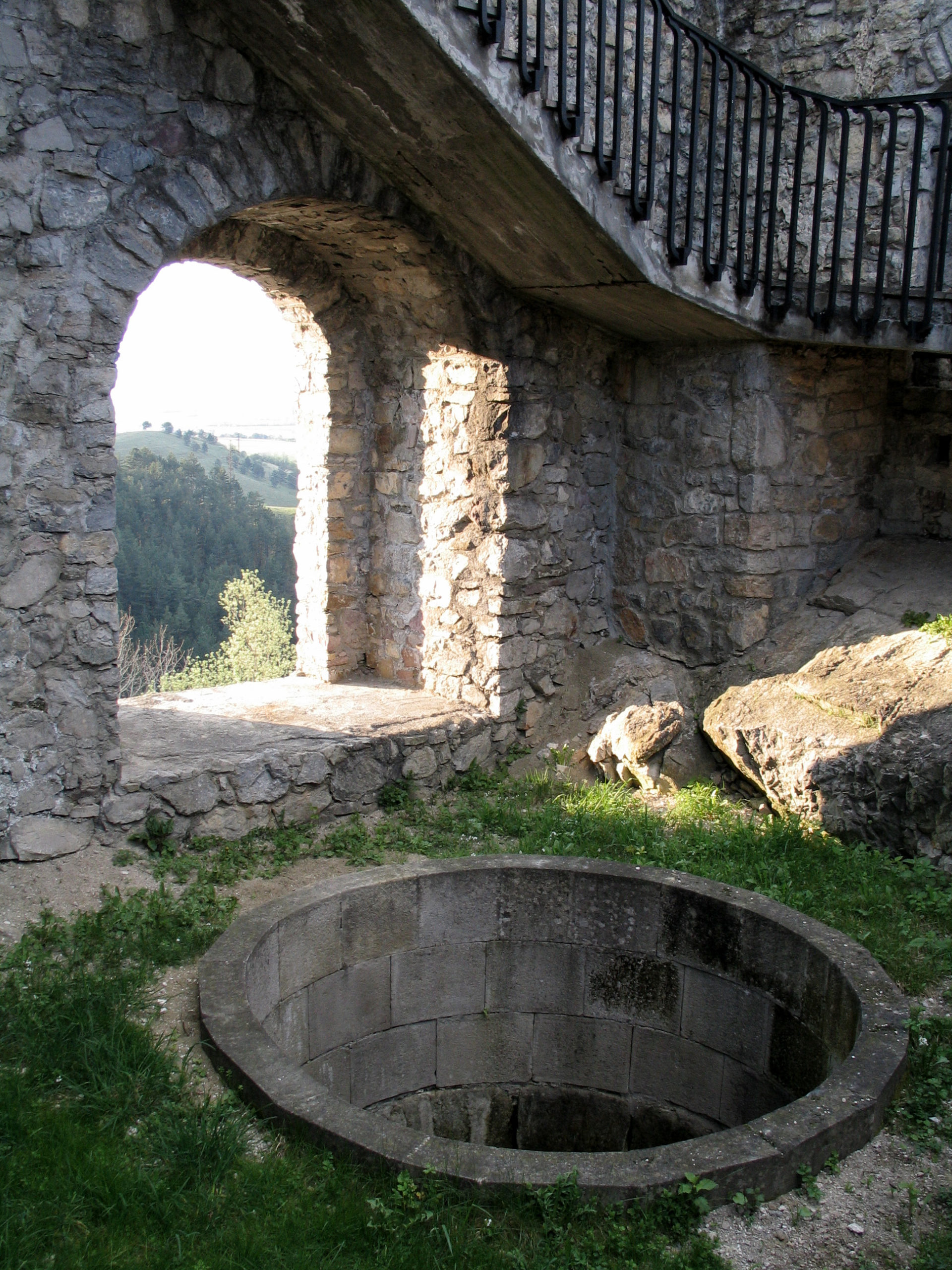
In the 16th century, the construction of the fortifications continued. On the western side, an outer rampart was built, incorporating three semi-circular bastions. From the south, a new entrance gate and gun fortification was made, which was later added to and covered with a roof. On the north-western side they built a defensive wall with a small tower, thus further improving the defences of the castle. In the 17th century, large cannon bastions were added to the original bastions on the western side. A new building was constructed in the castle’s main courtyard, and the castle well was gradually dug out to a depth of 88 m. The southern courtyard was covered over, thus providing further living space. Finally, another two advanced gates with a portcullis were added to the southern side of the castle complex. This gave the castle its final appearance with dimensions of 165 x 61 m. The best illustration of its size is a copper engraving dating from 1676 depicting the building from the west.
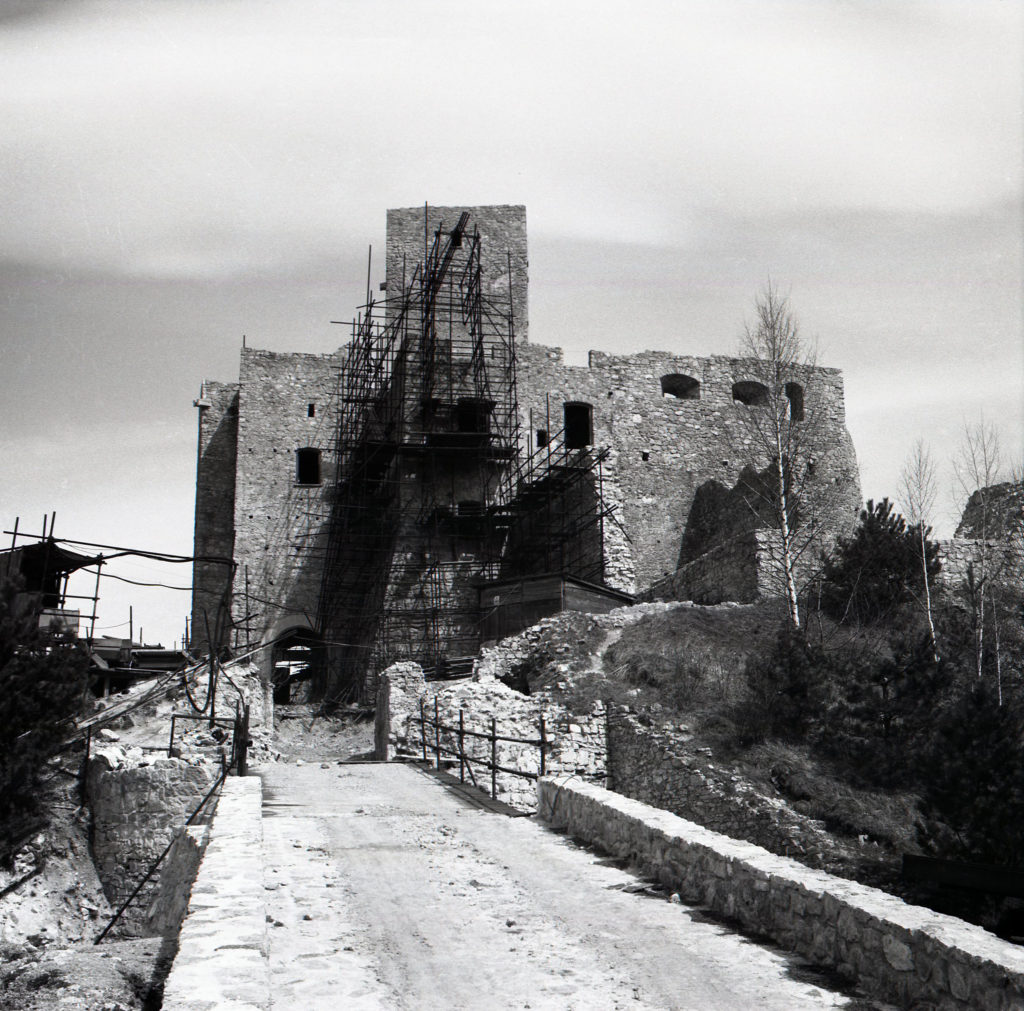
Renovation of Strečno castle (1978 – 1994)